

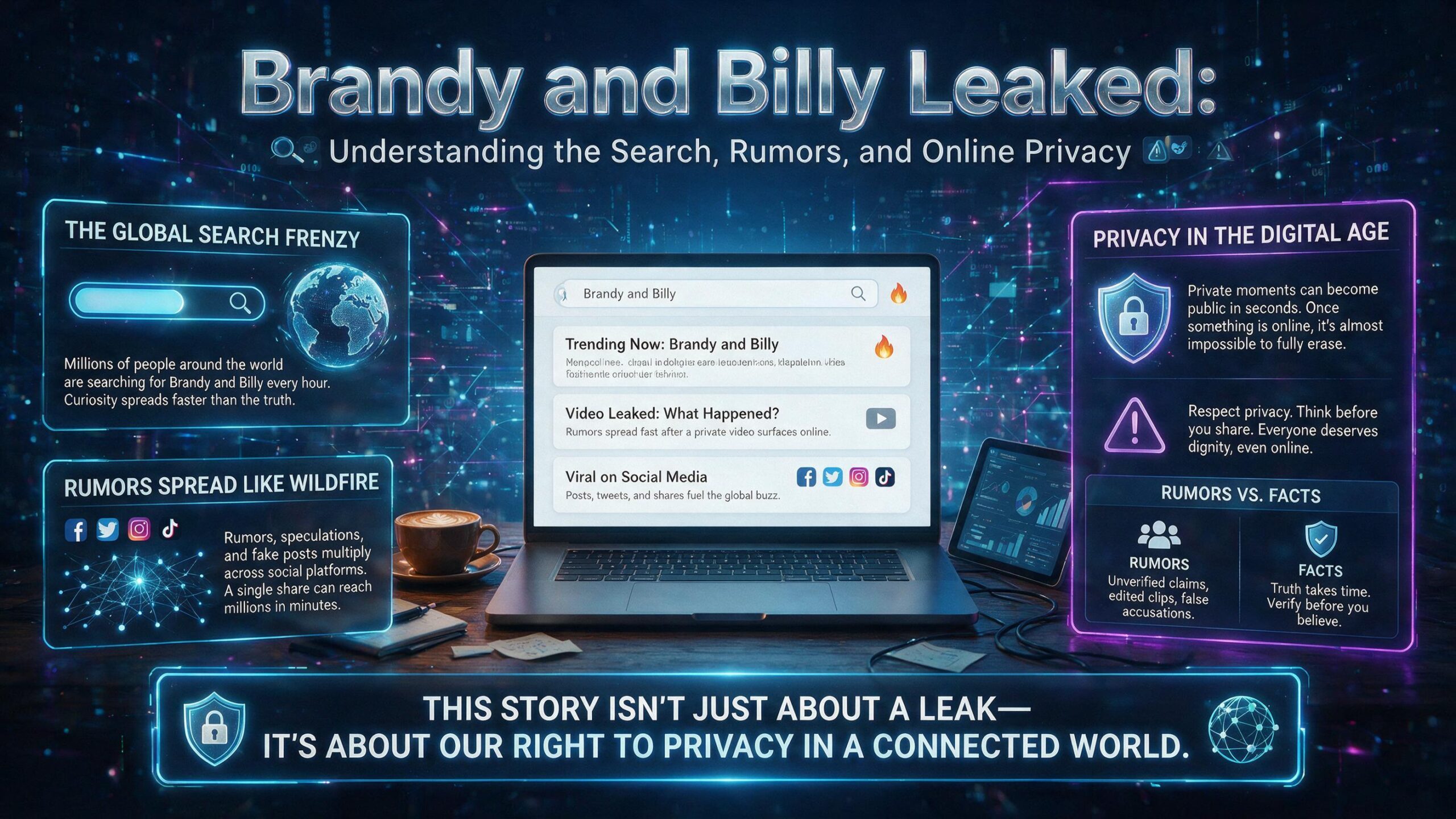
The search phrase “brandy and billy leaked” can quickly attract attention because words like “leaked” often make an online story sound more dramatic than it really is. People may come across the phrase on social media, search engines, forums, or posts that promise exclusive information. However, a search query by itself does not confirm that any private material exists or that claims connected to the phrase are accurate.
When a topic starts circulating online, curiosity is natural. People want to know who Brandy and Billy are, what supposedly happened, and why the phrase is appearing in searches. The problem is that online rumors can spread much faster than reliable information. A misleading headline can be copied hundreds of times before anyone checks whether the original claim had evidence behind it.
That is why it is important to approach the “brandy and billy leaked” search carefully. Rather than treating an unverified claim as fact, readers should look for trustworthy information, avoid spreading private content, and remember that real people can be affected by online speculation. Understanding how these situations develop can help internet users make better decisions when they encounter similar stories.
What Does “Brandy and Billy Leaked” Mean?
The word “leaked” is commonly used online to describe material that someone claims was shared without permission. However, the term can be used loosely, and sometimes it appears in titles simply because it generates clicks. A search result containing the word does not automatically establish that a genuine leak occurred.
brandy and billy leaked In the case of a phrase such as “brandy and billy leaked,” there may be multiple reasons why people are searching for it. The phrase could be connected to a rumor, a social media discussion, misleading content, impersonation, or an unrelated piece of media that has been given a sensational title. Without reliable evidence, it is not responsible to assume that one particular explanation is true.
This distinction is especially important when a search may involve private individuals or personal material. Publishing an unverified story as though it were confirmed can turn speculation into something that appears factual. A responsible article should therefore separate what is known from what is merely being discussed online.
Why Leaked-Content Rumors Spread So Quickly
brandy and billy leaked Online rumors often grow because social platforms reward content that gets attention. A dramatic phrase can encourage people to click, comment, repost, or search for more information. Once enough users interact with a post, algorithms may expose it to an even larger audience, creating the impression that the story must be important or legitimate.
brandy and billy leaked Another factor is repetition. Someone may see a claim on one account, then encounter the same wording on another website. Because the statement appears in several places, it can feel confirmed even when every copy came from the same original rumor. Repetition is not the same thing as verification.
Click-driven websites can make the situation even more confusing. Some pages use a person’s name alongside words such as “leaked,” “viral,” or “exclusive” to attract visitors. The actual page may contain little useful information, or it may simply repeat speculation. Readers should be cautious about assuming that a sensational headline represents reliable reporting.
How to Check Whether an Online Claim Is Real
The first step is to slow down before believing or sharing the claim. Look at where the information originated and whether the source provides verifiable evidence. A random social media account, anonymous post, or website designed primarily to attract clicks should not automatically be treated as an authoritative source.
brandy and billy leaked It is also useful to compare information across reputable sources. If a significant event involving a public figure has genuinely been confirmed, established reporting or an official statement may provide additional context. On the other hand, if the only references are copied posts, vague claims, or pages that all point to one another, that is a good reason to remain skeptical.
Readers should also watch for misleading wording. Phrases such as “you won’t believe this,” “everyone is searching,” or “watch before it disappears” are often designed to create urgency rather than provide evidence. Genuine information does not become more credible simply because a headline makes it sound urgent brandy and billy leaked.
The Privacy Issues Behind Alleged Leaks
brandy and billy leaked brandy and billy leaked Privacy is one of the most important considerations whenever a story involves supposedly leaked personal material. If private photos, videos, messages, or other information are shared without someone’s permission, distributing that material can cause serious emotional and reputational harm.
It is also worth remembering that online sharing can be difficult to reverse. A file may be copied, reposted, downloaded, or uploaded to another platform within minutes. Even when the original post disappears, copies can continue circulating. This makes responsible behavior particularly important when dealing with potentially private information.
People sometimes assume that something is fair to share simply because it is already online. That assumption is dangerous. The fact that a piece of content has been uploaded does not necessarily mean the person involved agreed to its distribution. Respecting consent and personal boundaries should remain important even when a topic is trending brandy and billy leaked.
Why You Should Be Careful With “Leaked” Search Results
Searching for allegedly leaked material can expose users to more than questionable information. Some websites built around sensational searches may contain aggressive advertising, deceptive download buttons, fake video players, or pages designed to encourage visitors to provide personal information brandy and billy leaked.
There is also a risk of encountering malicious files or suspicious links. A page claiming to contain a private video may instead attempt to persuade visitors to install software, complete an unusual verification process, or enter sensitive information. Curiosity should never outweigh basic online security.
Another issue is misinformation. A person searching for “brandy and billy leaked” may find edited screenshots, fake thumbnails, recycled videos, or unrelated material presented as something connected to the search term. Once misleading content starts circulating, determining its original source can become surprisingly difficult.
The Difference Between a Viral Story and a Verified Story
A story becoming viral does not mean it has been confirmed. Virality measures how quickly people are interacting with something, not whether the underlying claim is accurate. In fact, sensational or controversial posts can spread precisely because users react emotionally before checking the facts.
Verified information usually has a clearer trail. There may be identifiable sources, direct statements, credible reporting, or other evidence that can be independently examined. A collection of anonymous posts and screenshots does not necessarily provide the same level of reliability.
This is an important lesson for anyone working with online content or SEO. Search volume can tell you what people are curious about, but it cannot tell you whether the claims behind a keyword are true. Good content should answer the user’s intent without turning an unverified search phrase into a fabricated story.
How Content Creators Can Cover Sensitive Search Terms Responsibly
Content creators often encounter difficult keywords that have substantial search interest but limited reliable information. The best approach is not to manufacture details simply to satisfy the keyword. Instead, the content can explain the search trend, discuss verification, and provide useful context without repeating harmful rumors as facts.
SEO does not require sensationalism. An article can naturally use the target keyword while clearly explaining that the underlying claims may be unverified. This approach can also build greater trust with readers because it demonstrates that the publisher values accuracy over clicks.
Writers should also avoid unnecessary descriptions of allegedly private material. If the existence, authenticity, or origin of such content has not been independently established, describing it in detail can make misinformation more convincing. Responsible SEO means optimizing for search engines while still maintaining editorial standards.
What Readers Should Do If They Encounter Private Content
If you come across content that appears to be someone’s private material, the safest approach is not to download, save, repost, or distribute it. Sharing it can increase the harm to the person involved and can contribute to the continued circulation of material that may have been distributed without consent.
Instead, consider reporting the post or account through the platform’s available reporting tools. If the content appears fraudulent or malicious, avoid interacting with suspicious links and do not provide personal information. Taking a moment to stop the spread can be more helpful than becoming another person who amplifies the story.
It is also worth remembering that the person at the center of an online rumor is a real human being. A trending search can make someone’s personal situation feel like entertainment to thousands of strangers. Treating people with basic dignity is important even when the internet encourages users to react quickly.
Final Thoughts on “Brandy and Billy Leaked”
The phrase “brandy and billy leaked” illustrates how quickly a sensational search term can create curiosity online. However, curiosity should not be confused with confirmation. Without reliable evidence, readers should avoid presenting rumors, screenshots, or anonymous posts as established facts.
The safest approach is to verify information through credible sources, remain skeptical of clickbait, and avoid searching for or sharing material that may have been obtained or distributed without consent. These habits protect both readers and the people who may be affected by online speculation.
Ultimately, responsible internet use is about more than finding information quickly. It is about understanding where information comes from, recognizing when a claim is unverified, protecting privacy, and thinking carefully before sharing something with others. When a sensitive keyword starts trending, those principles matter even more.
You May Also Read:How to Make Pancakes with Pancake Mix